loader image

Blog

Medical Negligence or Known Complication? How Should a Patient Assess What Happened?

A patient may undergo surgery, ICU treatment, delivery, diagnostic procedure or other hospital treatment expecting recovery. But sometimes the result may be unexpected: infection, bleeding, organ injury, nerve injury, vision loss, worsening condition, repeat surgery, disability or death. In such situations, families often ask whether it is medical negligence or [...]

Read More

Contractor Took Advance but Did Not Complete the Work: Evidence Consumers Should Preserve

Many house owners pay advance amounts to contractors for construction, renovation, roofing, waterproofing, interior work, painting, plumbing, electrical work or finishing work. The contractor may promise quick completion, collect money for materials and labour, start some work and later delay, stop attending calls, abandon the site or demand additional amounts. [...]

Read More

Cashless Health Insurance Denied: Does It Mean the Final Insurance Claim Is Rejected?

Cashless health insurance denial creates immediate pressure during hospitalisation. The hospital may ask the patient or family to pay the bill before discharge. The TPA or insurer may say that cashless approval is not possible due to query, incomplete documents, suspected pre-existing disease, waiting period, policy exclusion, non-disclosure allegation or [...]

Read More

Wrong CIBIL Entry After Loan Closure: How Should a Consumer Proceed?

A wrong CIBIL entry after loan closure can seriously affect a consumer’s financial life. A person may have fully repaid a personal loan, vehicle loan, credit card outstanding, gold loan, housing loan or consumer durable loan, but the credit report may still show outstanding balance, overdue amount, settled status, written-off [...]

Read More

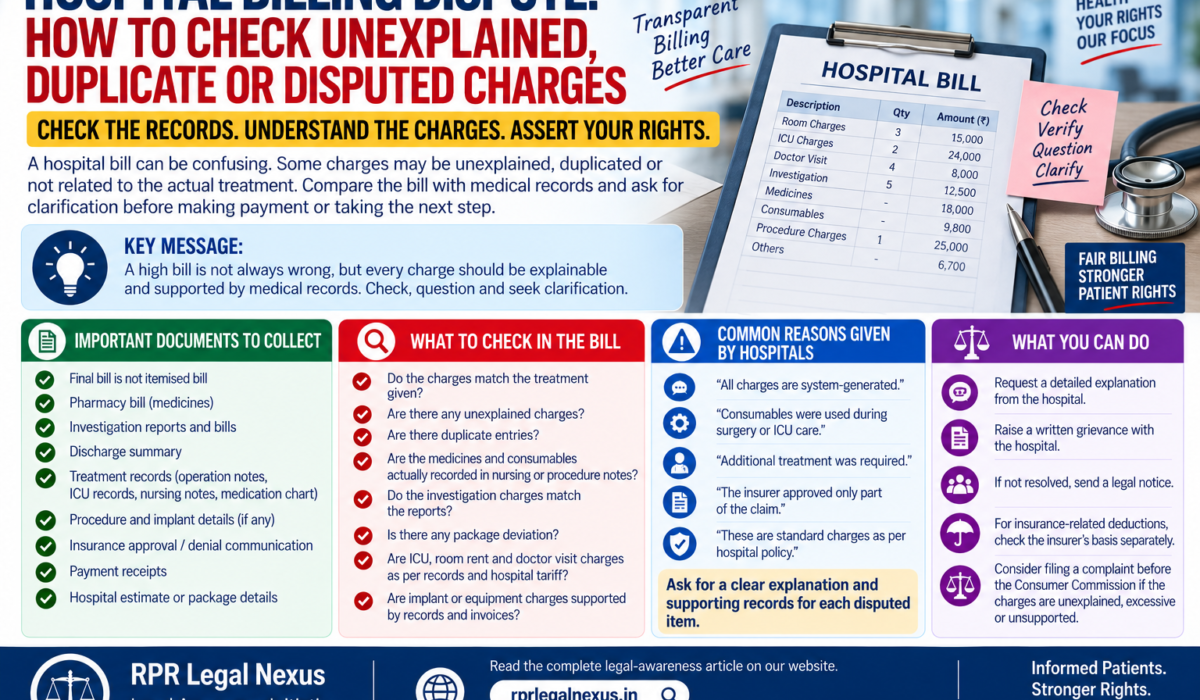
Hospital Refusing or Delaying Medical Records: What Can a Patient or Family Do?

Medical records are often the most important documents after hospital treatment, surgery, ICU admission, death, insurance rejection or suspected medical negligence. Without proper records, a patient or family may not be able to understand what treatment was given, why a complication occurred, whether billing was proper or whether further legal [...]

Read More

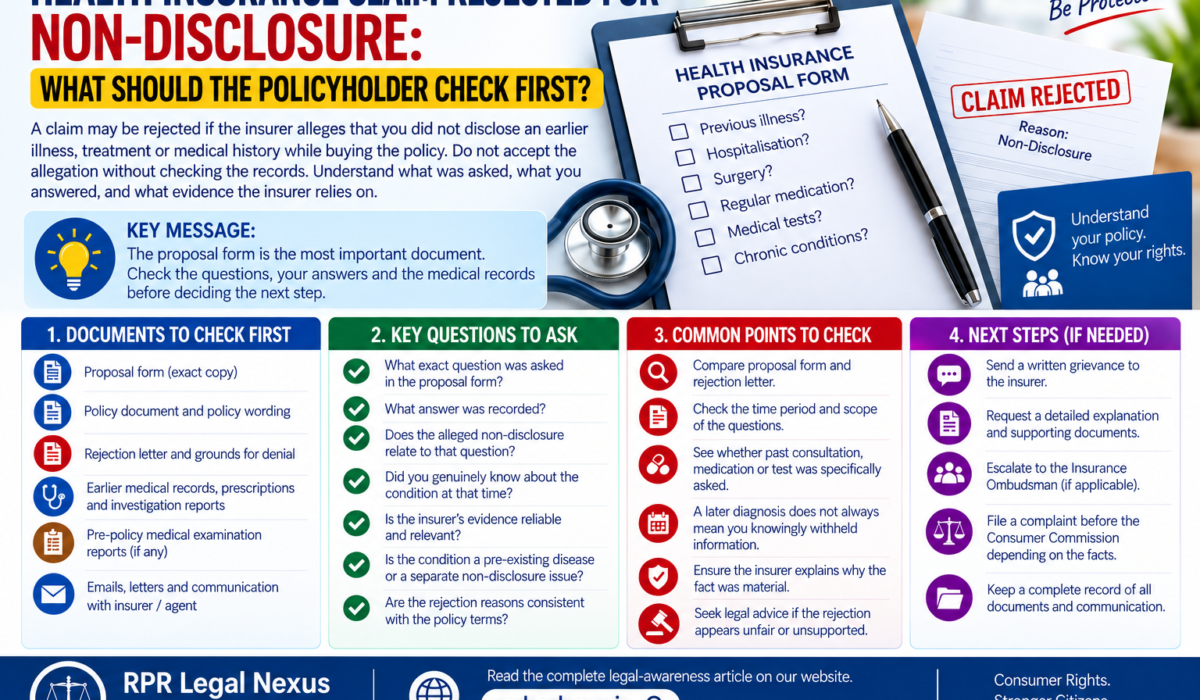
Health Insurance Claim Rejected for Pre-Existing Disease: What Documents Can Challenge the Rejection?

A health insurance claim may be rejected when the insurer alleges that the illness was a pre-existing disease. This is one of the most common reasons given in health insurance disputes. The policyholder may receive a rejection letter stating that the disease, symptom, treatment or condition existed before the policy [...]

Read More

Builder or Contractor Stopped House Construction After Taking Money: What Can the Consumer Do?

A house construction dispute usually becomes serious when the builder or contractor collects advance payments, starts the work, and then stops construction without proper reason. The consumer may be left with an incomplete structure, unpaid workers, exposed materials, defective work, additional rent, loan instalments and pressure to arrange another contractor. [...]

Read More

Medical Negligence in Kerala: What Evidence Should a Patient Collect Before Taking Legal Action?

Medical negligence concerns often arise after an unexpected death, surgery complication, delayed diagnosis, ICU deterioration, wrong procedure, lack of informed consent, post-operative infection, missing records or unexplained hospital billing. But a medical negligence case cannot be built only on suspicion, pain or dissatisfaction with the outcome. The first requirement is [...]

Read More

Health Insurance Claim Rejected? 10 Things to Check Before Accepting the Insurer’s Decision

A health insurance claim rejection can place a patient and family under sudden financial pressure. The policyholder may have paid premiums regularly, submitted hospital bills and followed the claim process, but the insurer may still reject the claim by referring to policy exclusions, pre-existing disease, waiting period, non-disclosure, incomplete documents [...]

Read More